
Breathing for stress: the long exhale
A long exhale means breathing out for longer than you breathe in, for example in for four and out for eight. It takes two minutes and no equipment. In a Stanford trial, an exhale focused pattern called cyclic sighing raised positive mood more than mindfulness meditation did.
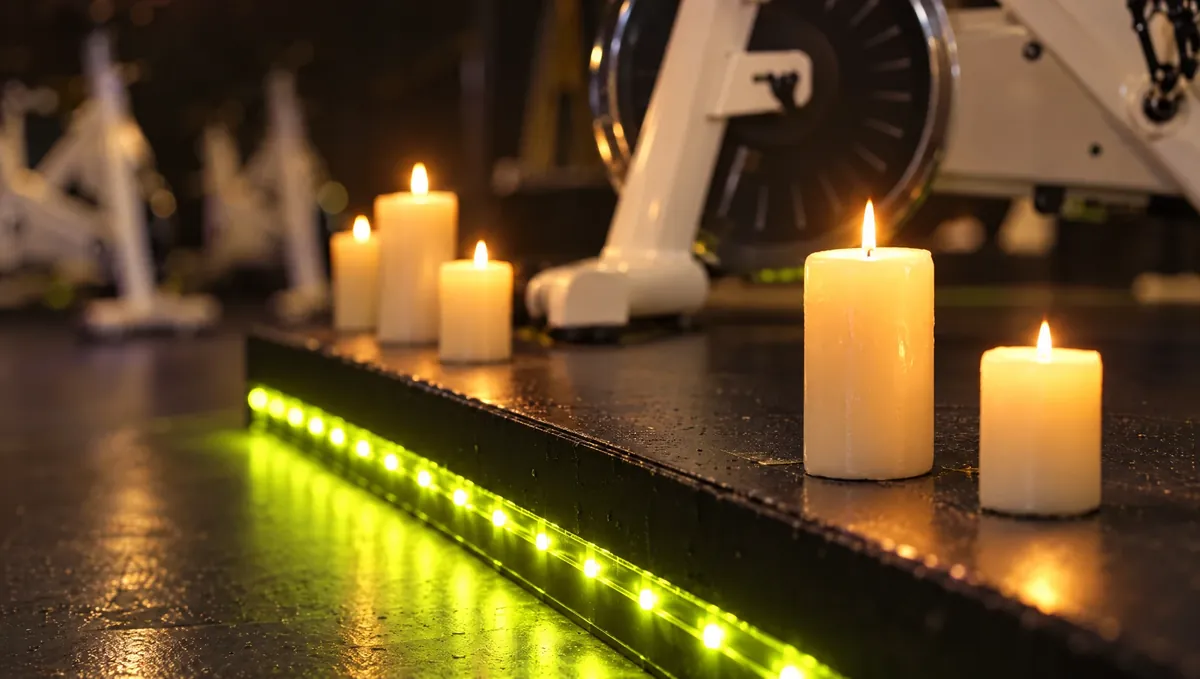
Picture minute 34 of a Breathwork class at Culture of Sweat. You are on one long seated climb, heavy and slow, and the music builds slowly. The coach gives one cue: when it gets hard, make the out-breath longer. Nobody stands, and nobody holds a breath.
This page covers why the breath out matters, cyclic sighing as the Stanford team defined it, and how to try a long exhale at home.
Why breathe out for longer than you breathe in?
Your heart rate rises a little on each breath in and falls on each breath out. Stanford researchers describe inhales raising heart rate and exhales lowering it as a normal effect of breathing. A long breath out gives more of each breath to the slowing half.
That was the team's starting idea. They predicted that patterns weighted toward the breath out would ease anxiety and lift wellbeing more than other patterns. Then they tested it.
What is cyclic sighing?
Cyclic sighing is the exhale focused pattern from the Stanford trial. As the team instructed it, you breathe in slowly, then breathe in once more to fill your lungs, even if the second breath is shorter. Then you breathe out slowly and fully. Both breaths in go through the nose, and the breath out goes through the mouth, though nose only is fine. You repeat it for five minutes, seated or lying down.
| Cyclic sighing, as tested | The long exhale, this page | The Breathwork class | |
|---|---|---|---|
| Breath in | Two: one slow, then a short top up | One, for four | One, for four pedal strokes |
| Breath out | Slow and full, through the mouth | Slow, for eight | For six |
| Breath holds | None | None | None |
| Length | Five minutes a day in the trial | Two minutes on the timer | Taught in the warm up, then matched to the pedals |
| Position | Seated or lying down | Seated | Seated on the bike |
What did the Stanford trial find?
The trial enrolled 108 people aged 18 and older, most of them recruited from an undergraduate psychology class at Stanford University. Each was randomly assigned one practice for a month, five minutes a day. Thirty were assigned to cyclic sighing. The others did box breathing, a fast breathing pattern with holds, or mindfulness meditation.
The cyclic sighing group had a significantly larger rise in positive mood than the meditation group. Its benefit also grew with the number of days people practised, which the team did not see in the other groups. Measured by a wrist strap, the group's daily breathing rate fell more than the meditation group's.
Some things did not change. Anxiety fell after the practice in every group, meditation included. Over the month, the team found no significant change in heart rate variability or resting heart rate in any group. The authors call the trial exploratory, note that each group was small, and say it ran four weeks with no follow up.
Their summary is careful too. They say daily five minute cyclic sighing has promise for managing stress. Promise is the right word for one small trial.
Try a long exhale for two minutes
Sit with both feet on the floor. Press start and follow the circle. It grows for four while you breathe in and shrinks for eight while you breathe out.
No screen handy? Count it in your head.
- Sit with both feet flat on the floor, one hand on your belly if you like.
- Breathe in through your nose for a count of four.
- Breathe out slowly for a count of eight, as if through a straw.
- Keep going for two minutes.
- If eight is too long, breathe out for six. The breath out only has to be the longer one.
- If you feel lightheaded, stop and breathe normally.
The class breathes out for six, not eight
Breathwork at Culture of Sweat is a level 1 class on the bike. It teaches one pattern: in for four pedal strokes, out for six. It does not teach cyclic sighing or in four, out eight. Nobody holds their breath, and there is no fast breathing.
The idea is the same one, though. On the rolling hills, the breath is matched to the pedals.
Let the out-breath be the long one.
The coach on the rolling hills in Breathwork, at minute 22
On the climb, the breath out gets longer when the work gets harder. In the last still minutes, the coach teaches three breaths, out longer than in, for the car, your desk or a hard conversation. Breathwork on a bike walks through the hour, and our guide to breathwork and safety compares slow and fast breathing.
For other home patterns, coherent breathing keeps the in and out equal, and box breathing adds two short holds.
Breathwork with a coach, four times a week
Breathwork runs Monday at 6:45 pm, Tuesday at noon, Thursday at 7:15 am and Friday at noon. The noon classes are 45 minutes, and the others are an hour. It is a level 1, so it can be one of your first three rides.
Every class is included in a membership. The founding 50 pay $68 every two weeks or $149 a month, held while the membership stays continuous. After them, membership is $87 every two weeks or $189 a month. A single drop in is $28, or $20 for students with valid student ID. The studio is at 85 Cliff Street, Nanaimo. Booking opens with the doors on Tuesday, December 1, and every class and when it runs is on one page.
Questions people ask
Is cyclic sighing the same as the long exhale?
They share the long breath out. Cyclic sighing adds a second, short breath in through the nose before the slow breath out. The long exhale on this page takes one breath in.
Does the Breathwork class teach in four, out eight?
No. The class teaches in for four pedal strokes, out for six. In four, out eight is a home exercise with a longer breath out.
When can I use a long exhale?
Anywhere you can sit or stand still for a minute: in the car before you drive, at your desk, or before a hard conversation.
What if eight counts is too long?
Breathe out for six instead, the class pattern. The breath out only needs to be longer than the breath in. If you feel lightheaded, stop and breathe normally.
Sources
- Cell Reports Medicine, Brief structured respiration practices enhance mood and reduce physiological arousal, Published January 10, 2023, read November 17, 2026