
Six breaths a minute: coherent breathing
Coherent breathing means slowing your breath to about six breaths a minute: in for a count of five, out for a count of five, with no holds. Researchers call the same thing slow paced breathing. You need a chair and a count, nothing else.
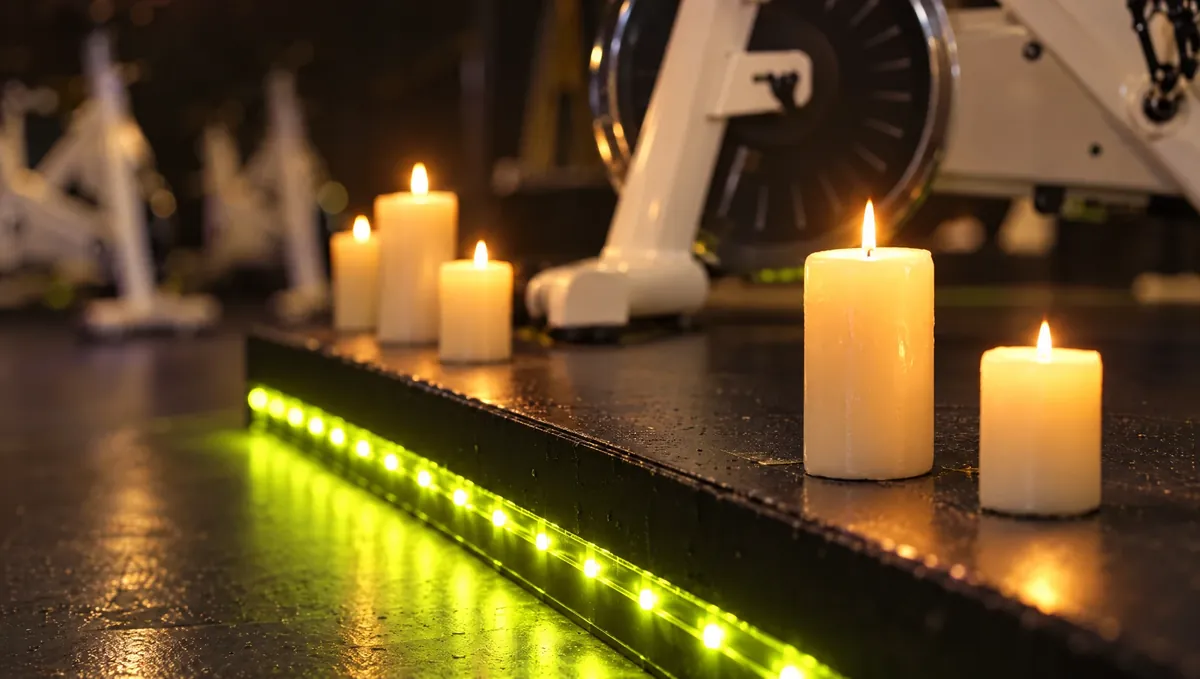
Picture minute 45 of a Breathwork class at Culture of Sweat. The resistance comes off and the pace falls. The lights go down, and the music slows to a track with no vocals. The coach counts two minutes of the class pattern, in for four and out for six, then goes quiet.
Coherent breathing keeps the two halves equal instead. This page covers how to do it, what the research on slow breathing found, and who that research was done on.
Six breaths a minute is half your resting pace, or less
A clinicians' guide from the Center for Applied Psychophysiology at Truman State University puts a healthy resting adult at 12 to 20 breaths a minute. Coherent breathing slows that to six. Each breath takes ten seconds: five in, five out.
Slow patterns differ in how they split those seconds. Here is the arithmetic for each pattern in this journal, counted in seconds at home.
| Pattern | In | Hold | Out | Hold | Breaths a minute |
|---|---|---|---|---|---|
| Coherent breathing | 5 | 0 | 5 | 0 | 6 |
| The class pattern, at home | 4 | 0 | 6 | 0 | 6 |
| The long exhale | 4 | 0 | 8 | 0 | 5 |
| Box breathing | 4 | 4 | 4 | 4 | Just under 4 |
The class pattern lands on the same pace as coherent breathing, with more of each breath on the way out. In the room the counts are pedal strokes, not seconds, so the pace follows your legs. The long exhale and box breathing each have their own page.
Try coherent breathing for two minutes
Sit with your back supported and both feet on the floor. Press start and follow the circle. It grows for five while you breathe in and shrinks for five while you breathe out.
No screen handy? Count it in your head.
- Sit with both feet flat on the floor.
- Breathe in gently through your nose for a count of five.
- Breathe out gently for a count of five. Do not push the air out.
- Keep going for two minutes.
- If five is too long, count to three or four and build up.
- If you feel lightheaded, stop and breathe normally.
The NHS teaches almost the same exercise for stress. Its version has you count steadily from one to five on the way in, then one to five on the way out. It says you may not reach five at first, and that the exercise helps most as part of your daily routine.
What does the research on slow breathing show?
Researchers at the University of Pisa reviewed studies of slow breathing, under ten breaths a minute, in healthy adults aged 18 to 65. From 2,461 abstracts, only 15 studies qualified. Across them, slow breathing raised heart rate variability. People reported more comfort, relaxation and alertness, and less anxiety, anger and confusion.
Heart rate variability is the small change in the gap between heartbeats. Stanford researchers describe how breathing in raises heart rate and breathing out lowers it, a normal effect. A review by the Hunter Pain Clinic in Australia looked at studies in healthy people. In those studies, slow breathing, particularly at six breaths a minute, went with bigger swings in heart rate and blood pressure than a typical pace.
The Pisa team found the clearest links at six breaths a minute. They are also plain about the limits. They planned a meta-analysis but could not pool the studies, because the methods differed too much. They call the evidence weakened by unclear descriptions of how people breathed.
A month long trial adds a note of caution. The same Stanford team gave adults, most of them students, five minutes of breathing a day for a month. They found no significant change in heart rate variability over the month in any group. In the moment and over weeks are different questions.
Is six breaths a minute right for everyone?
Six is a round number, not a law. Some clinics train slow breathing with a heart rate monitor, called heart rate variability biofeedback. The clinic first searches for the pace that suits each person, called their resonance frequency.
The Truman State guide puts that pace between 4.5 and 6.5 breaths a minute for adults, and 6.5 to 9.5 for children. Children differ because they are smaller. The same guide calls it an open question whether tuning the pace to each person beats a plain six.
Psychologists at the University of Sussex make a similar point in their review of breathwork trials. They note it is possible that simply breathing at about five to six breaths a minute, with no monitoring equipment, can have similar effects to biofeedback. For home, a timer is enough.
The class breathes out longer than it breathes in
Breathwork at Culture of Sweat is a level 1 class on the bike. It teaches one pattern: in for four pedal strokes, out for six. It does not teach coherent breathing, and it has no breath holds and no fast breathing.
On the rolling hills, the breath is matched to the pedals. On the long seated climb, the cue is to make the breath out longer when it gets hard. In the last still minutes, the coach teaches the take home.
Three breaths, out longer than in. In the car, at your desk, before a hard conversation.
The take home breath, taught in the still minutes at the end of Breathwork
What is breathwork, and is it safe? compares slow and fast breathing, and Breathwork on a bike walks through the hour.
Where to practise with a coach in Nanaimo
Breathwork runs Monday at 6:45 pm, Tuesday at noon, Thursday at 7:15 am and Friday at noon. The noon classes are 45 minutes, and the others are an hour. It is a level 1, so it can be one of your first three rides.
Every class is included in a membership. The founding 50 pay $68 every two weeks or $149 a month, held while the membership stays continuous. After them, membership is $87 every two weeks or $189 a month. A single drop in is $28, or $20 for students with valid student ID. The studio is at 85 Cliff Street, Nanaimo. Booking opens with the doors on Tuesday, December 1, and every class and when it runs is on one page.
Questions people ask
Is coherent breathing the same as resonance breathing?
Close. Coherent breathing usually means a fixed pace of about six breaths a minute. Resonance breathing tunes the pace to each person, which a clinic measures with a heart rate monitor.
Do I need an app or a monitor?
No. A count in your head works, and so does the timer on this page. Monitors are for clinics that tune the pace to each person.
Does the Breathwork class teach coherent breathing?
No. The class teaches in for four pedal strokes, out for six, with the breath out longer. Coherent breathing keeps the two halves equal.
What if five counts feels too long?
Start with fewer and build up. Breathe gently, never forcing it. If you feel lightheaded, stop and breathe normally until it passes.
Sources
- Frontiers in Human Neuroscience, How Breath-Control Can Change Your Life: A Systematic Review on Psycho-Physiological Correlates of Slow Breathing, Published September 7, 2018, read November 17, 2026
- Frontiers in Neuroscience, A Practical Guide to Resonance Frequency Assessment for Heart Rate Variability Biofeedback, Published October 8, 2020, read November 17, 2026
- Breathe, The physiological effects of slow breathing in the healthy human, Published December 2017, read November 17, 2026
- Scientific Reports, Effect of breathwork on stress and mental health: A meta-analysis of randomised-controlled trials, Published January 9, 2023, read November 17, 2026
- NHS, Breathing exercises for stress, Reviewed June 12, 2026, read November 17, 2026
- Cell Reports Medicine, Brief structured respiration practices enhance mood and reduce physiological arousal, Published January 10, 2023, read November 17, 2026