
What is breathwork, and is it safe?
Breathwork is any practice where you change your breathing on purpose to change how you feel. It comes in two kinds: slow breathing with a long breath out, and fast breathing, often with breath holds. The slow kind is low risk for most adults and has the stronger evidence.
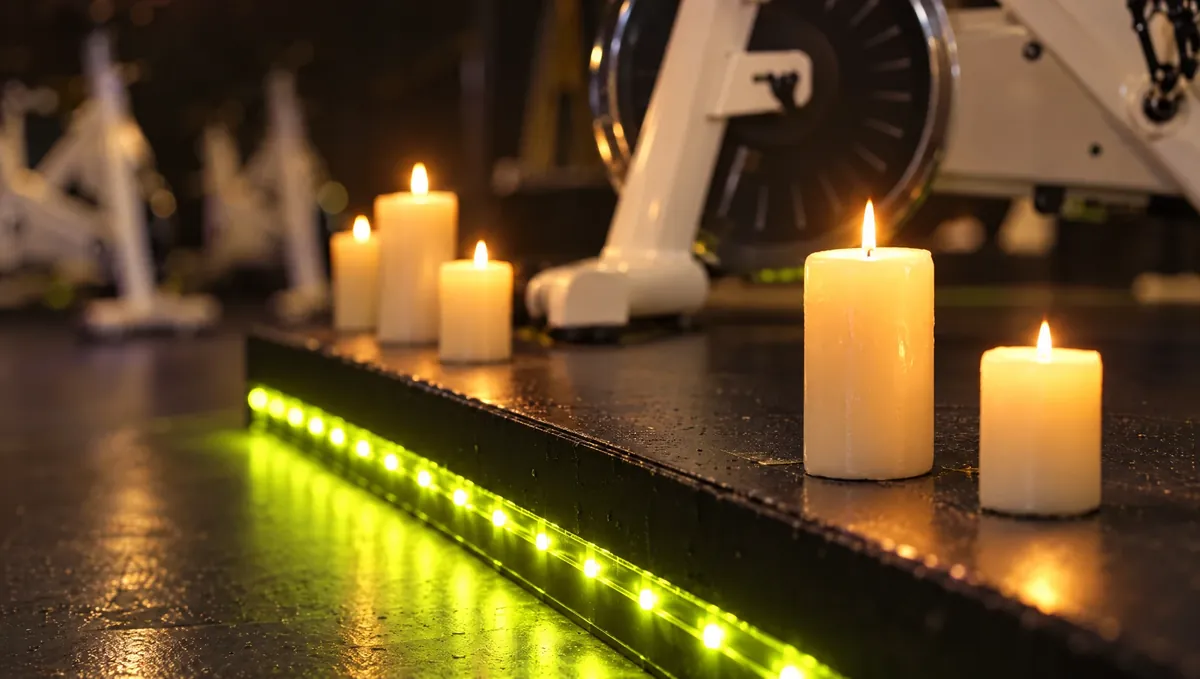
Picture the last minutes of a Monday evening class. The pedals are still. One hand rests on your belly, and the only light is at floor level. Earlier the coach counted in for four, out for six, three times, then went quiet. Now the room just breathes.
That is Breathwork at Culture of Sweat in Nanaimo: the slow kind only, seated on a bike. This page explains both kinds, what the research found, and how to try a slow breath right now.
Breathwork comes in a slow kind and a fast kind
Most breathwork you will see advertised is one of two families under a brand name. Ask which one a session is before you book it.
| Slow breathing | Fast breathing | |
|---|---|---|
| The pace | Fewer breaths a minute, the breath out longer than the breath in | Quick, deep breaths for minutes at a time |
| Breath holds | None, or a few seconds | Often long, after each fast round |
| How it feels | Calm and in control | Built to stir you up |
| Examples | Box breathing, the long exhale, coherent breathing | Holotropic sessions, the popular breath hold methods |
| Risk | Low for most adults | Dizziness and tingling; screen first, never near water |
What does the research say about breathwork?
Psychologists at the University of Sussex pooled 12 randomised trials with 785 adults. Breathwork lowered stress by a small to medium amount compared with no breathwork. Ten of those trials taught slow breathing, and the effect held for them. Only two tested fast breathing. Those two showed no clear effect on stress, and the authors say two is too few to judge. They also warn against hype running ahead of the evidence.
A Stanford study gave 108 adults, most of them university students, five minutes of breathing a day for a month. The exercise built on a long breath out lifted mood more than the same five minutes of mindfulness meditation. It also lowered their breathing rate more.
Small studies, modest effects. That is enough to make slow breathing worth five minutes of your day. It is not enough to call it a cure for anything.
Is breathwork safe?
Slow breathing is low risk for most adults. None of the trials in the Sussex review that checked for side effects reported lasting harm. If you feel lightheaded, stop and breathe normally until it passes.
Fast breathing is a different practice. Breathing fast and deep lowers the carbon dioxide in your blood, and the US National Library of Medicine lists what follows: feeling lightheaded or dizzy, numbness and tingling around the mouth, and spasms in the hands and feet. In the one fast breathing trial in the Sussex review that noted side effects, some people had hot flushes, shortness of breath or sweating.
Keep fast breathing and breath holds away from water entirely. The Lifesaving Society's BC and Yukon branch warns that deep, fast breathing before going under can make a swimmer black out with no urge to breathe first. It tells pools not to allow it.
Even a hospital screened people first. A community hospital ran holotropic breathwork for about 11,000 psychiatric inpatients over 12 years. It excluded anyone with severe heart disease, severe muscle or bone conditions, pregnancy or paranoid thinking. If any of that applies to you, ask your doctor before a fast breathing session.
Our Breathwork class uses only the slow kind
Breathwork at Culture of Sweat is a level 1 class on the bike. The pattern is in for four pedal strokes, out for six. Nobody holds their breath, and there is no fast breathing.
The coach teaches the pattern once in the warm up, counts three rounds, then goes quiet. You can say a full sentence the whole hour, which is what talk pace means. Breathwork on a bike walks through the hour from the door to the last still minute.
We chose the slow kind on purpose. It has the stronger evidence, and you can take it home to a hard day. Fast breathing can make you dizzy, and a bike is no place to be dizzy.
Your breath goes everywhere you go.
The closing line of every Breathwork class
Try a slow breath right now, in two minutes
Press start and follow the circle. It grows while you breathe in for four and shrinks while you breathe out for six.
No screen handy? The same pattern works anywhere.
- Sit with both feet flat on the floor.
- Breathe in through your nose for a count of four.
- Breathe out slowly for a count of six, as if you were cooling a spoon of soup.
- Keep going for two minutes.
- If you feel lightheaded, stop and breathe normally.
Breathwork runs four times a week in Nanaimo
Breathwork runs Monday at 6:45 pm, Tuesday at noon, Thursday at 7:15 am and Friday at noon. It is a level 1, so it can be one of your first three rides, and a level 1 ride for beginners covers the rest.
Every class is included in a membership. The founding 50 pay $68 every two weeks or $149 a month, held while the membership stays continuous. After them, membership is $87 every two weeks or $189 a month. A single drop in is $28, or $20 for students with valid student ID. The studio is at 85 Cliff Street, Nanaimo. Booking opens with the doors on Tuesday, December 1, and every class and when it runs is on one page.
Questions people ask
Is breathwork the same as meditation?
No. Meditation trains where your attention goes. Breathwork changes the breath itself. They overlap: slow breathing often feels calm and inward, and many meditations start with the breath.
Can breathwork make you dizzy?
Fast breathing can, because it lowers the carbon dioxide in your blood. Slow breathing rarely does. If you feel lightheaded, stop and breathe normally until it passes.
Who should check with a doctor before fast breathing?
Anyone pregnant, or living with a serious heart, muscle or joint condition. And nobody should do fast breathing or breath holds in or near water.
Do I need experience for the Breathwork class?
No. It is a level 1. The coach teaches the pattern in the warm up, counts three rounds, then goes quiet. It can be one of your first three rides.
Sources
- Scientific Reports, Effect of breathwork on stress and mental health: A meta-analysis of randomised-controlled trials, Published January 9, 2023, read November 17, 2026
- Cell Reports Medicine, Brief structured respiration practices enhance mood and reduce physiological arousal, Published January 10, 2023, read November 17, 2026
- MedlinePlus, US National Library of Medicine, Hyperventilation, Reviewed July 22, 2026, read November 17, 2026
- Lifesaving Society BC and Yukon Branch, Shallow Water Blackout information bulletin, Undated bulletin, read November 17, 2026
- MAPS Bulletin, A Clinical Report of Holotropic Breathwork in 11,000 Psychiatric Inpatients in a Community Hospital Setting, Spring 2013, Volume 23, Number 1, read November 17, 2026