
Should you ride when sick or tired?
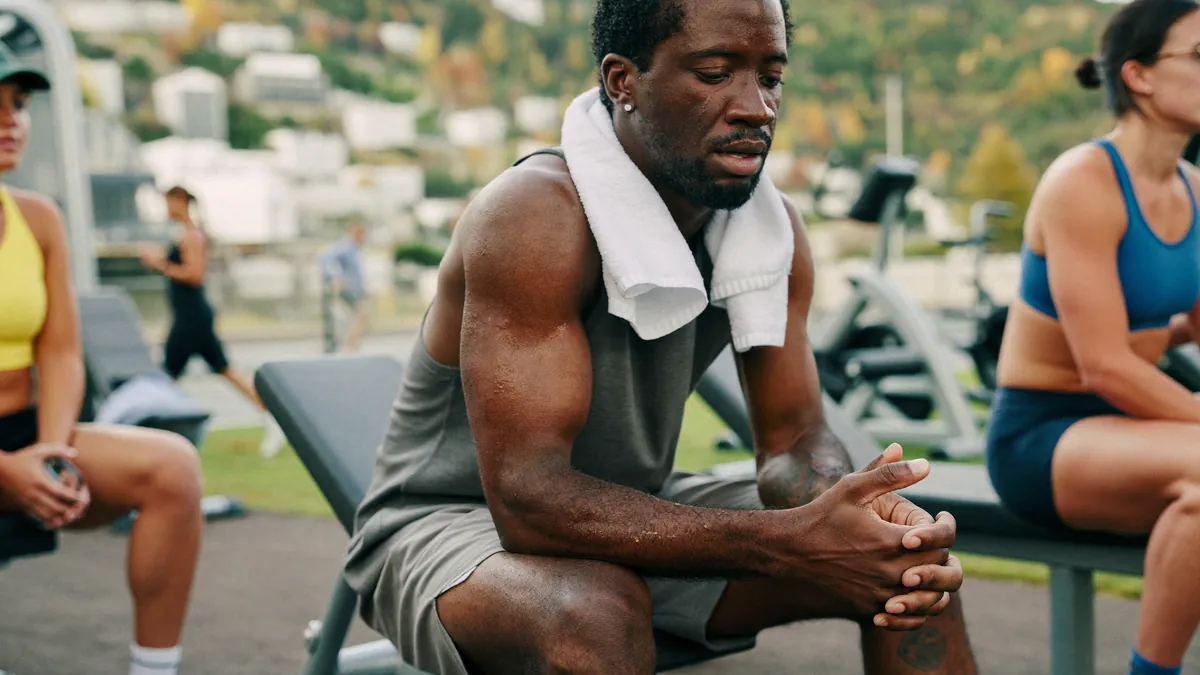
If you are sick, stay home. HealthLink BC lists staying home when you are ill among the ways to avoid spreading influenza, and our room holds thirteen bikes. Tired is different: the NHS says regular exercise makes you feel less tired in the long run.
Picture Hills on a Thursday at 5:30 pm. Thirteen bikes share one room. There are three hills, and the third has two minutes standing at effort 9 to 10. That is a hard room to bring a fever to. It is also an easy one to skip, with no fee, up to two hours before.
This page covers staying home when you are ill, where the above the neck rule comes from, riding tired, and coming back.
Should you go to a spin class when you are sick?
No. Stay home, for the room's sake and your own.
HealthLink BC's page on influenza lists ways to reduce the risk of getting the flu and spreading it to others. Staying home when you are ill is on the list. Its self-care advice says the same: get plenty of rest and stay home when you are sick. An adult, it says, can spread the virus from about one day before symptoms start to 5 days after.
Colds travel the same way. HealthLink BC says they are spread by coughs, sneezes and close contact.
A class is a group indoors. A 2021 viewpoint from the University of Sydney, in BMJ Open Sport and Exercise Medicine, puts it plainly for sport. Training or competing in a group while carrying a respiratory viral illness is associated with spread to others, particularly when training indoors.
What this page cannot tell you is what you have, or how long you can pass it on. A health care provider can. The influenza page gives the provincial health advice line, 8-1-1, toll-free in British Columbia.
Where does the above the neck rule come from?
From sports medicine, and from opinion more than trials.
You may have heard it: if the symptoms are all above the neck, you can ride. Researchers at the University of Turku described it in a paper about athletes. A neck-check rule, they write, has been commonly used by sports physicians. Exercise is allowed if symptoms are limited to the upper respiratory tract. Their verdict is short: the rule is nonscientific but may be partly useful.
The Sydney authors mention it too. Some experts suggest it, they write, feeling it is safe to take part if all symptoms are upper respiratory and do not involve the chest.
| What you notice | What a source says | Who said it, and about whom |
|---|---|---|
| A respiratory illness, and a group indoors | Training in a group is associated with spread to others | University of Sydney authors, about sport |
| Symptoms only above the neck | The neck-check rule allows exercise. The rule is nonscientific but may be partly useful | University of Turku researchers, about athletes |
| Chest pain, fainting, shortness of breath or palpitations | Absolute contraindications for exercise, and a reason for heart investigations | The same Turku paper, about athletes |
| Influenza | Get plenty of rest and stay home when you are sick | HealthLink BC |
Two limits matter. Both papers are about athletes, not about someone in a first month of rides. And the rule only asks about your own body. It says nothing about the rider on the next bike.
One more source is about spin itself. Doctors at a Korean hospital wrote about serious muscle breakdown after first spinning classes. One of their ways to prevent it is to modify or skip exercise when a risk factor such as influenza is present. Is spin class safe? covers that report.
Tired is not the same as sick
Tired has many causes. HealthLink BC says you may feel mildly fatigued because of overwork, poor sleep, worry, boredom or lack of exercise.
The NHS says regular exercise will make you feel less tired in the long run. Even a single 15-minute walk can give you an energy boost, it says. Its advice is to start with a small amount of exercise and build up gradually.
So on a tired day, an easy ride is a fair choice. A level 1 here is a full sentence the whole way, and nobody stands. You set your own resistance in every class, and fourteen rides a week are level 1.
Some tiredness is a different matter. If it is overwhelming, and rest and sleep do not relieve it, the NHS says you may have an underlying medical condition. It says to consult a doctor.
Sleep counts on its own, too. Canada's 24-Hour Movement Guidelines for adults aged 18 to 64 ask for 7 to 9 hours of good-quality sleep on a regular basis. A ride does not replace a night. If a roster is what tires you, see fitness classes for shift workers.
Coming back after an illness
Slowly. HealthLink BC says fever and other flu symptoms can last up to 7 to 10 days. The cough and weakness may last one to two weeks longer.
For the tiredness that comes with a viral illness, its page on fatigue gives two lines. Ease back into your usual activities, it says, so the fatigue does not drag on. It also suggests alternating rest with exercise and building the exercise up gradually.
Here that has a shape. Come back at level 1, with the resistance light. Your sentence is the check, and what talk pace means explains it.
Notice your heart coming down.
The coach in Intervals, in the still minutes after the last burst
That line is said in the still minutes of Intervals, a level 3. It is worth borrowing at every level.
The studio's side is the booking. Cancel up to two hours before any class and your credit comes back, with no late or no show fees. Members also get one free pause of up to a month each year.
Riding at 85 Cliff Street
Every class and when it runs sits on one page. Sore after a spin class covers the day after a ride, and what to eat and drink before a spin class covers food and water. Every place to ride in Nanaimo lists the other rooms in town.
Every class is included in a membership. The founding 50 pay $68 every two weeks or $149 a month, held while the membership stays continuous. After them, it is $87 every two weeks or $189 a month. A single drop in is $28, or $20 for students with valid student ID. The studio is at 85 Cliff Street, Nanaimo, and booking opens with the doors on Tuesday, December 1.
Questions people ask
Should I go to spin class with a cold?
Stay home. HealthLink BC says colds are spread by coughs, sneezes and close contact, and our room holds thirteen bikes. Cancel up to two hours before class with no fee.
Is the above the neck rule real?
It is a rule of thumb. Researchers at the University of Turku, writing about athletes, say sports physicians commonly use it, and call it nonscientific but partly useful.
Should I exercise when I am tired?
Often, yes. The NHS says regular exercise makes you feel less tired in the long run. Tiredness that rest and sleep do not relieve is a reason to see a doctor, it says.
When can I ride again after the flu?
HealthLink BC says flu symptoms can last up to 7 to 10 days, with cough and weakness one to two weeks longer. Its fatigue page says to return to activities slowly.
Do I lose my class if I cancel sick?
No. Cancel up to two hours before any class and your credit comes back. There are no late or no show fees.
Sources
- HealthLink BC, HealthLinkBC File 12b: Facts about influenza (the flu), Last updated September 25, 2025, read November 21, 2026
- HealthLink BC, Colds, Current as of October 31, 2022, read November 21, 2026
- BMJ Open Sport and Exercise Medicine, 'Stay home when sick' advice: implications for sport and exercise, Published October 12, 2021, read November 21, 2026
- Journal of Sport and Health Science, Sport and exercise during viral acute respiratory illness: time to revisit, Published December 9, 2023, read November 21, 2026
- Electrolytes and Blood Pressure, Spinning-induced Rhabdomyolysis: Eleven Case Reports and Review of the Literature, Published December 30, 2015, read November 21, 2026
- HealthLink BC, Weakness and Fatigue, Current as of August 25, 2022, read November 21, 2026
- NHS, Self-help tips to fight tiredness, Reviewed November 8, 2023, read November 21, 2026
- Canadian Society for Exercise Physiology, Canadian 24-Hour Movement Guidelines for Adults aged 18 to 64 years, Published October 27, 2020, updated April 6, 2026, read November 21, 2026