
How to start meditating: a first week
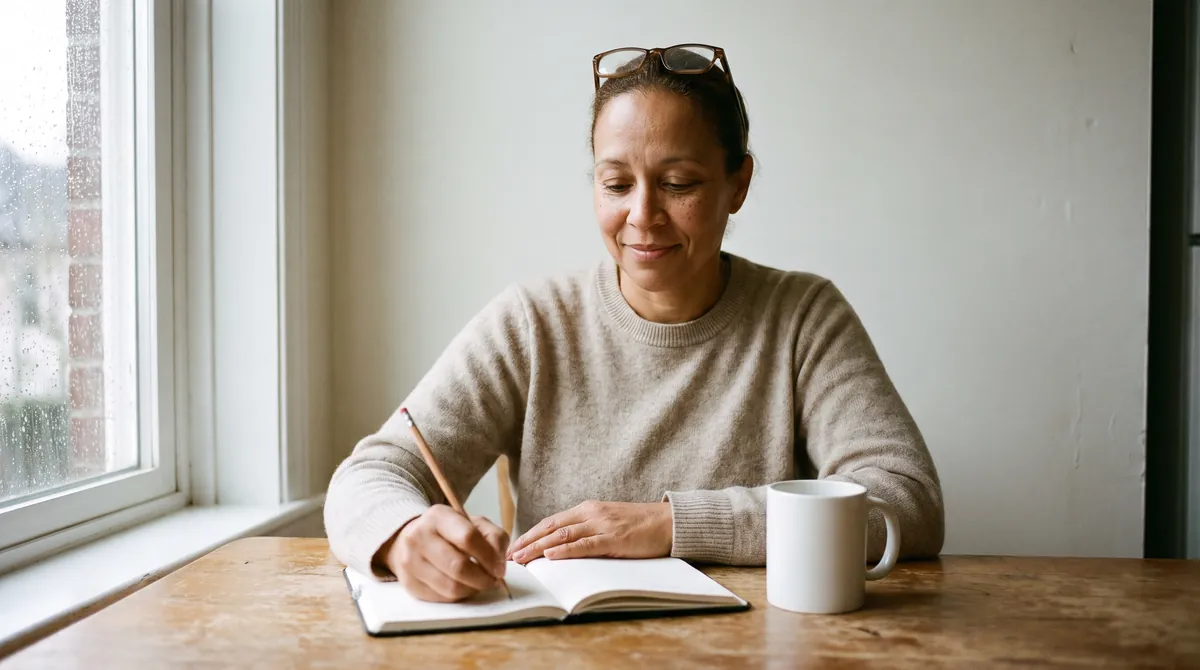
Start small. Sit somewhere comfortable, notice your breathing, and bring your attention back each time it wanders. HealthLink BC suggests only 10 minutes at a time when you start. A first week can be seven short practices, and a wandering mind is part of each one.
Every ride at 85 Cliff Street starts the same way. Phones are already in the basket at the door. The room sits through one minute of silence, and then the coach gives one prompt, once. In Breathwork the prompt is this: just notice your breath, and do not change it yet.
This page gives a first week you can follow at home, built on HealthLink BC's steps, with what the NHS and a US health agency add.
How do you start meditating at home?
With a time, a place and ten minutes. HealthLink BC's steps for mindful meditation are short.
- Pick a time and a place where nobody will interrupt you. Quiet helps, but some noise is fine. Traffic outside is part of the moment too.
- Get comfortable. A chair, the floor or lying down all work.
- Rest your eyes. Close them, or lower your gaze to the floor just ahead of you.
- Notice your breathing as it is, without changing it. Feel it in your lungs and chest.
- Come back when you drift. See the thought, let it pass, and return to your breathing.
All five steps come from HealthLink BC's page on doing meditation. It says you need no special tools or equipment.
On how long, it is plain. When you start, try to meditate for only 10 minutes at a time. Then increase the time bit by bit.
The NHS adds one habit. It can be helpful to pick a regular time, it says, such as a morning journey to work or a walk at lunchtime.
A first week, one day at a time
The week is ours. Each day's practice comes from the source named beside it.
| Day | What to do | Where it comes from |
|---|---|---|
| 1 | Pick your time and place. Sit, and notice your breathing | HealthLink BC |
| 2 | Same time, same place. Each time your mind wanders, let the thought go and come back | HealthLink BC |
| 3 | Silently name what turns up, such as "this is anxiety" | The NHS |
| 4 | Move your attention through your body, from your feet to your head | HealthLink BC |
| 5 | Take a slow walk by yourself, counting your steps as you breathe in and out | HealthLink BC |
| 6 | Eat one meal in silence, slowly, with your attention only on the food | HealthLink BC |
| 7 | Sit again. If the week went well, try a second sitting in the evening | HealthLink BC |
Days 1, 2 and 7 come from HealthLink BC's meditation steps. Days 4, 5 and 6 come from its page on mindfulness-based stress reduction. Day 3 comes from the NHS, which says some people find it helpful to silently name thoughts and feelings.
Days 1 to 4 and day 7 are sittings of 10 minutes. Days 5 and 6 carry the same attention into a walk and a meal.
What if it feels hard, or wrong?
Hard is normal. The NHS says some people find it very difficult to practise mindfulness. As soon as they stop what they are doing, lots of thoughts and worries crowd in. Mindfulness is not about making these thoughts go away, it says. It is about seeing them as mental events that come and go.
If sitting is the hard part, move. Some people find it easier to cope with an over-busy mind, the NHS says, if they are doing gentle yoga or walking. Moving meditation covers that.
Feelings may come up too. HealthLink BC says you may feel emotions such as anger, impatience, sadness or happiness. Do not try to hold on to these feelings or let them go, it says. Just notice them.
Wrong is different from hard. The NHS says mindfulness is not right for everyone. Some people find that it does not help them, or that it can make them feel worse. If that is you, stop.
It is not a treatment either. A US health agency says not to use meditation to replace conventional care, or to postpone seeing a health care provider about a medical problem. Does meditation help sleep and anxiety? covers what the studies found.
A two minute warm up for restless days
Some days you will not settle. A slow, counted breath gives your attention one thing to follow first. It is a breathing exercise, not meditation, because it changes the breath. Breathwork or meditation explains the difference.
Press start and follow the circle. It grows while you breathe in for four and shrinks while you breathe out for six.
No screen handy? Count it in your head.
- Sit with both feet flat on the floor.
- Breathe in through your nose for a count of four.
- Breathe out slowly for a count of six.
- Keep going for two minutes.
- Let the count go, and start the day's practice.
- If you feel lightheaded, stop and breathe normally.
A class can be the first step instead
Some people start more easily in a room with others. Guided meditation in Nanaimo lists five places, with a weekly library drop in for beginners among them. What happens in a meditation class covers what to wear and bring. For more ways to slow down in town, see self care and stress relief in Nanaimo.
We run no sitting meditation. Our rides start with one minute of silence and end with still minutes on the bike. Breathwork, an easy class, teaches one slow pattern: in for four pedal strokes, out for six.
Just start. Nothing fancy.
Our quiz, under what you came for
Quiet rides at 85 Cliff Street
Breathwork runs Monday at 6:45 pm, Tuesday at noon, Thursday at 7:15 am and Friday at noon. Every class and when it runs sits on one page.
Every class is included in a membership. The founding 50 pay $68 every two weeks or $149 a month, held while the membership stays continuous. After them, it is $87 every two weeks or $189 a month. A single drop in is $28, or $20 for students with valid student ID. The studio is at 85 Cliff Street, Nanaimo, and booking opens with the doors on Tuesday, December 1.
Questions people ask
How long should a beginner meditate?
HealthLink BC suggests only 10 minutes at a time when you start, then adding time bit by bit.
What if my mind keeps wandering?
HealthLink BC says not to worry or feel bad about yourself. Notice the thought, let it go, and bring your focus back to your breathing. You may do this over and over.
Do I need an app, a cushion or a quiet house?
HealthLink BC says you need no special tools or equipment, and that some noise, such as traffic, is just part of the present moment.
Is meditation right for everyone?
The NHS says many people find mindfulness helpful, but some find it does not help them or can make them feel worse. If that is you, stop.
Can I start in a class instead of at home?
Yes. Our guide to guided meditation in Nanaimo lists five places, and our own rides start with a minute of silence and end with still minutes on the bike.
Sources
- HealthLink BC, Stress Management: Doing Meditation, Current as of October 20, 2022, read November 21, 2026
- HealthLink BC, Mindfulness-Based Stress Reduction, Current as of October 20, 2022, read November 21, 2026
- NHS, Mindfulness, Reviewed August 17, 2026, read November 21, 2026
- US National Institutes of Health, National Center for Complementary and Integrative Health, Meditation and Mindfulness: Effectiveness and Safety, Last updated June 2022, read November 21, 2026